

Description
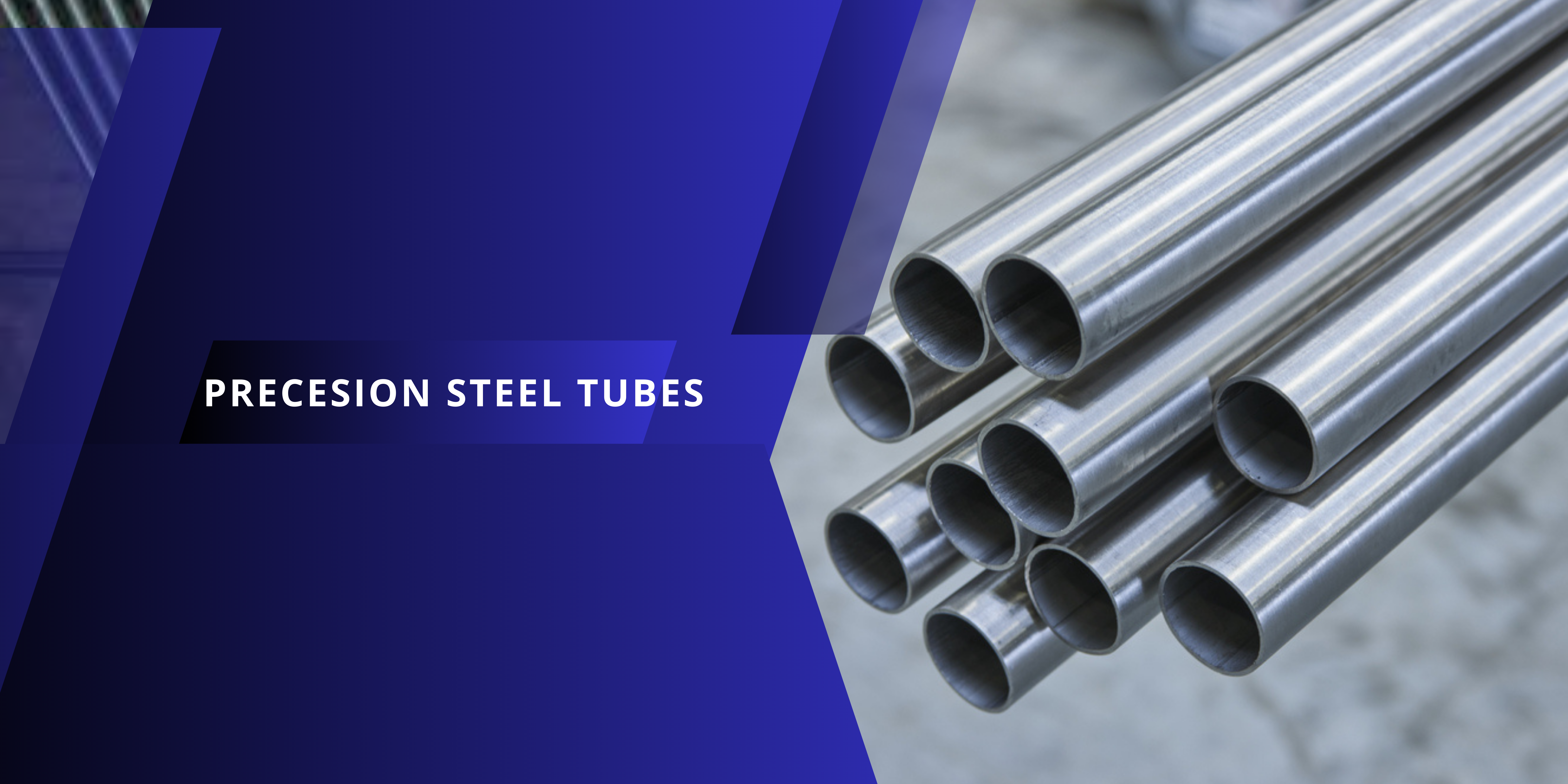
General Engineering Tubes (GET) and Precision Steel Tubes manufactured under IS 3601 and IS 3074 are the backbone of many structural, mechanical, and automotive applications. These standards ensure that the tubes possess the specific mechanical properties and dimensional tolerances required for demanding engineering tasks.
Here is a breakdown of the specifications and applications for these two critical Indian Standards.
1. IS 3601: Steel Tubes for General Engineering Purposes
This standard covers welded and seamless carbon steel tubes used for general engineering applications where high-pressure containment is not the primary requirement.
Key Classifications
Tubes under IS 3601 are typically categorized by their material grade (e.g., WT 160, WT 210, WT 240, WT 310), where the number represents the minimum yield strength.
- Manufacturing Types: Hot finished seamless (HFS), Cold finished seamless (CDS), Electric Resistance Welded (ERW).
- Common Uses:
Conveyor rollers and agricultural implements.
Textile machinery components.
Structural supports, scaffolding, and fencing.
Chassis for light vehicles and trailers.
2. IS 3074: Steel Tubes for Automotive Purposes
Revised in 1979, this standard is significantly more stringent regarding dimensional accuracy and surface finish, as these tubes are intended for the high-stress environment of the automotive industry.
Comparison of Conditions
These tubes are often defined by their delivery condition, which dictates their flexibility and strength:
| Abbreviation | Condition | Characteristics |
| CDW | Cold Drawn Welded | High dimensional accuracy and smooth finish. |
| CEW | Cold Finished Electric Welded | Excellent strength-to-weight ratio for frames. |
| HFW | Hot Finished Welded | Used where precision is less critical than cost. |
| SW | Softened | Fully annealed for maximum ductility/bending. |
-
Common Uses:
- Shock absorber casings and steering columns.
- Exhaust pipes and fuel lines.
- Bicycle and motorcycle frames.
- Propeller shafts and tie rods.
Why Compliance Matters
Using tubes that strictly adhere to these standards ensures:
- Weldability: Consistent chemical composition allows for reliable welding without cracking.
- Bendability: Standardized heat treatments (like normalizing) ensure the tubes don’t kink or snap during CNC bending.
- Safety: Guaranteed yield and tensile strengths prevent structural failure under load.
Would you like me to create a detailed technical data sheet comparing the specific chemical compositions (Carbon, Manganese, Phosphorus) for the different grades within these standards?
Reviews
There are no reviews yet.